How Deep Should a Raised Garden Bed Be?
The ideal raised garden bed depth depends on what you're growing, where the bed sits, and how much root space your plants need. Learn how deep to build a raised bed, when a shallow bed is enough, and when deeper soil is worth the extra cost.
One of the first questions to answer before building a raised garden bed is surprisingly simple:
How deep should it be?
The answer depends on what you plan to grow.
A bed used for lettuce and herbs doesn’t necessarily need the same depth as one intended for tomatoes, carrots, or other crops with larger root systems.
Going deeper can provide more growing volume, but it also means buying more soil and potentially spending more on construction materials.
The goal is to build a bed that’s deep enough for your plants without paying for unnecessary soil.
How Deep Does a Raised Garden Bed Need to Be?
For many common vegetables, a raised bed around 8 to 12 inches deep can provide a useful starting point.
However, the ideal depth depends on what’s underneath the bed.
A raised bed sitting directly on healthy, workable ground has access to the soil below it.
A bed sitting on:
- Concrete
- Asphalt
- A deck
- Very compacted ground
- Poor-quality existing soil
needs to provide more of the root environment itself.
This distinction is important when choosing the height of your bed.
6-Inch Raised Beds
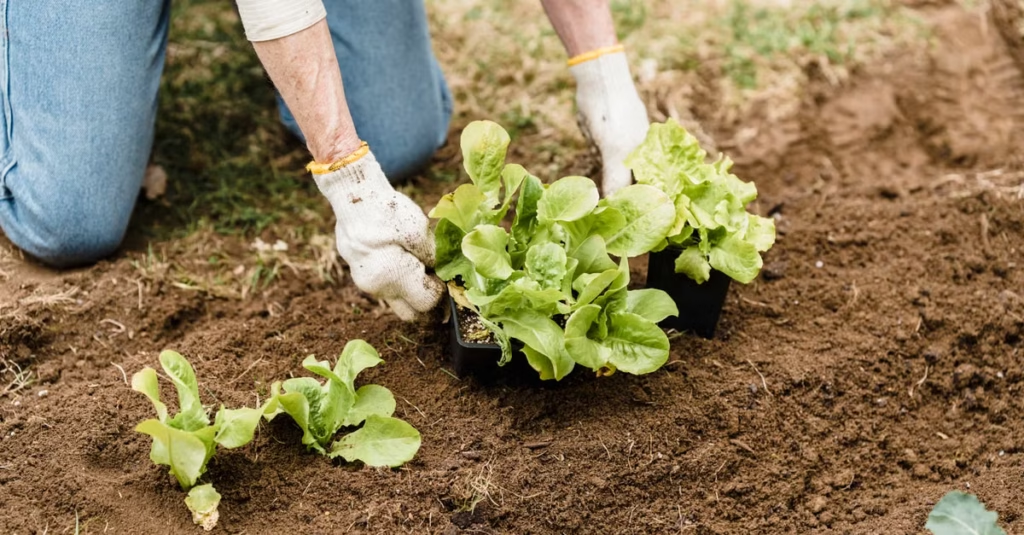
A relatively shallow bed can work for certain crops, particularly when the underlying ground is suitable for roots to continue growing downward.
Shallow beds can be useful for:
- Lettuce
- Spinach
- Some herbs
- Radishes
- Green onions
- Other shallow-rooted crops
They’re also less expensive to fill because they require less soil.
However, don’t assume a 6-inch bed will be appropriate for every crop.
8-Inch Raised Beds
Around 8 inches can provide more growing volume while still keeping the amount of soil relatively manageable.
This can work well for a range of smaller vegetables and herbs.
If the bed sits directly over healthy soil, roots may also be able to continue growing beyond the raised portion.
Before choosing this depth, consider what you’re growing and the condition of the ground underneath.
12-Inch Raised Beds
A 12-inch bed is a popular choice because it provides a reasonable amount of soil depth for many garden crops.
It can be suitable for:
- Tomatoes
- Peppers
- Beans
- Lettuce
- Leafy greens
- Many herbs
- A variety of other vegetables
A 12-inch depth also makes the bed easier to manage without requiring an extremely tall structure.
For a general-purpose vegetable garden, this can be a practical starting point.
18-Inch or Deeper Beds
Going deeper can make sense when you need additional root space or when the surface underneath isn’t suitable for growing.
For example, a deeper bed may be useful when building over:
- Concrete
- Hard-packed surfaces
- Contaminated or unsuitable soil
- Areas where digging isn’t practical
The tradeoff is straightforward:
More depth = more soil + more cost.
Before building an 18-inch or 24-inch bed, make sure you actually need the additional volume.
How Deep Do Tomato Roots Need?
Tomatoes can develop substantial root systems, but the exact root depth depends on variety, soil conditions, watering, and other factors.
A deeper bed can give tomatoes more usable growing space, especially when the underlying ground is poor or inaccessible.
But a tall raised bed isn’t automatically necessary for every tomato plant.
If the bed is built over healthy soil, roots may continue beyond the raised-bed soil.
Focus on creating a loose, well-drained root environment rather than simply maximizing depth.
What About Carrots?
Carrots are a good example of a crop where soil depth matters.
The edible root grows downward, so the growing medium should be deep enough for the variety you’re planting.
Shorter carrot varieties can work in shallower beds.
Longer varieties need more depth.
The soil should also be:
- Loose
- Relatively free of large rocks
- Well drained
- Easy for roots to penetrate
If you want to grow long carrots, build the bed around the crop rather than trying to force the crop into a shallow container.
Do Raised Beds Need a Bottom?
Usually, no.
If you’re building a raised bed directly on soil, you generally don’t need to construct a solid bottom.
Leaving the bottom open allows roots to interact with the ground beneath the bed.
A bottom may be necessary when the bed is being constructed on a hard surface or when you specifically need a contained growing environment.
But remember that a bottom changes the bed from a raised garden bed into something closer to a large container.
That means drainage becomes even more important.
Don’t Fill the Bottom With Gravel Just to Increase Drainage
It’s common to hear that raised beds should have a thick layer of gravel or rocks underneath the soil.
In many situations, that’s unnecessary.
If you’re building directly over soil, the better approach is usually to create a suitable soil mix and consider the drainage of the entire site.
If you’re building over a hard surface, design the bed for proper drainage instead of assuming gravel automatically solves the problem.
Height and Depth Aren’t Always the Same Thing
A bed’s physical height doesn’t necessarily equal the amount of soil you need.
For example, you might build a 16-inch-tall structure but fill it with less soil if you intentionally leave part of the structure below the surrounding grade or use another appropriate design.
For most simple raised beds, however, the easiest approach is to calculate the actual depth of soil you intend to use.
That’s the number you’ll need for your soil calculation.
How Much Soil Does a Raised Bed Need?
Once you’ve decided on the depth, calculating the volume is simple.
Use:
Length × Width × Depth in feet = cubic feet
For example:
8 ft × 4 ft × 1 ft
equals:
32 cubic feet
To convert to cubic yards:
32 ÷ 27 = 1.19 cubic yards
If your bed is 8 × 4 feet but only 8 inches deep:
8 × 4 × (8 ÷ 12)
equals approximately:
21.3 cubic feet
or:
0.79 cubic yards
That’s a significant difference.
Adding only a few inches of depth can increase the amount of soil you need considerably.
Deeper Isn’t Always Better
It’s easy to assume that a deeper raised bed must produce better plants.
Not necessarily.
A deeper bed can be beneficial, but it also means:
- More soil
- Higher material costs
- More weight
- Potentially more expensive construction
- More time to fill
If your plants don’t need the extra depth and the ground underneath is suitable, spending more money on soil may not provide much benefit.
Think About Accessibility Too
Bed height also affects how comfortable the garden is to maintain.
A taller bed can reduce bending and make gardening more accessible.
This can be particularly useful for gardeners who have difficulty working close to the ground.
In that case, the extra height may be worthwhile even if the plants themselves don’t require such a deep root zone.
Just remember that a taller bed requires a strong structure and substantially more soil.
A Practical Depth Guide
Here’s a simple way to think about it:
| Bed Depth | Good Starting Uses |
|---|---|
| 6 inches | Lettuce, herbs, shallow crops |
| 8 inches | Many greens and smaller vegetables |
| 12 inches | General-purpose vegetable garden |
| 18 inches | Deeper-rooted crops or poor underlying ground |
| 24+ inches | Container-like beds, special situations |
These are planning guidelines rather than strict rules.
Your climate, soil, crop variety, and growing conditions can change what’s appropriate.
Choose Depth Before Buying Materials
It’s better to decide your desired soil depth before buying lumber, soil, or other materials.
Start with:
- What do you want to grow?
- Where will the bed sit?
- What is underneath it?
- How deep should the soil be?
- How much soil will that require?
- What will the complete project cost?
This prevents one of the most common raised-bed mistakes: building the structure first and discovering later that filling it costs much more than expected.
Use the Soil Calculator Before You Build
Once you’ve chosen the dimensions, use a raised-bed soil calculator to estimate the amount of material you’ll need.
Enter:
- Length
- Width
- Soil depth
You’ll get the approximate cubic feet and cubic yards.
That number can then help you compare bagged soil with bulk delivery.
For larger projects, it’s especially useful to calculate every bed before placing a soil order.
Final Takeaway
For a general-purpose vegetable garden, around 8 to 12 inches of soil depth is a practical starting range for many situations.
Go shallower for crops with smaller root systems when the underlying ground is suitable.
Consider going deeper when you’re growing deeper-rooted crops, building over unsuitable ground, or intentionally creating a large container-style bed.
The best raised-bed depth isn’t the deepest one you can afford.
It’s the depth that gives your plants enough room to grow while keeping your project practical.
Plan the plants first, choose the depth second, and calculate your soil before you build.
Final Takeaway
Use the guidance above as a practical starting point, then adjust for your space, climate, materials, and project goals.