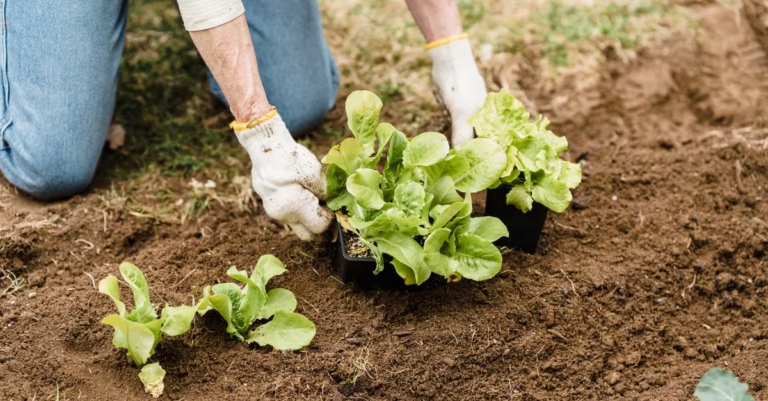
How to Prepare Garden Soil: A Practical Guide for Better Growth
Healthy plants start with healthy soil. Learn how to assess your garden soil, improve its structure, add organic matter, and prepare a better growing environment before planting.
You can buy excellent seeds and healthy plants, but they still need a good place to grow.
Garden soil provides the physical environment where roots develop, water moves, air reaches the root zone, and nutrients become available to plants. If the soil is compacted, poorly drained, or low in organic matter, plants can struggle even when everything else is done correctly.
The good news is that improving garden soil doesn’t have to mean replacing everything.
In many gardens, a few well-planned changes can make a noticeable difference.
Start by Understanding Your Existing Soil
Before adding anything, take a close look at what you already have.
Garden soil commonly falls somewhere between sandy, loamy, and clay-heavy conditions.
Sandy soil
Sandy soil drains quickly and is usually easy to work.
The downside is that it may have difficulty holding moisture and nutrients.
Clay-heavy soil
Clay soil can hold water and nutrients well, but it may become dense and difficult to work when wet.
Poorly managed clay soil can also restrict root growth.
Loamy soil
Loamy soil is often considered desirable because it can provide a useful balance between drainage, moisture retention, and structure.
But even good soil can benefit from regular additions of organic matter.
Don’t Work Wet Soil
One of the easiest ways to damage garden soil is working it when it’s saturated.
When wet soil is dug, tilled, or heavily walked on, soil particles can be pressed together.
That can create compaction and reduce the spaces where air and water move.
Instead, wait until the soil has dried enough to crumble rather than smear or form a sticky mass.
A simple test is to squeeze a small handful.
If it stays together as a wet lump and feels sticky, give it more time.
Add Organic Matter
Organic matter is one of the most useful tools for improving many garden soils.
Sources can include:
- Finished compost
- Well-aged organic materials
- Leaf-based compost
- Other suitable garden amendments
Organic matter can help improve soil structure and support biological activity.
The important word is finished.
Avoid adding large amounts of fresh, undecomposed material directly where you’re about to plant. Fresh organic material can behave very differently from finished compost.
Compost Isn’t a Magic Fix
Compost is valuable, but adding more isn’t always better.
A common mistake is assuming that a garden will improve simply by adding an enormous amount of compost every year.
Instead, think about the existing soil and what it actually needs.
The goal is to gradually improve the growing environment rather than constantly replacing the original soil.
A moderate, consistent approach is generally easier to manage.
Improve Drainage Where Necessary
Water is essential for plants, but roots also need oxygen.
If water remains around the root zone for long periods, some plants can struggle.
Before adding amendments, consider why the area stays wet.
Possible causes include:
- Compacted soil
- Low areas in the landscape
- Heavy clay
- Poor site drainage
- Excessive irrigation
Adding organic matter may improve soil structure, but it won’t necessarily solve a major site drainage problem.
If water naturally collects in a particular location, you may need to address the landscape itself.
Avoid Walking on Growing Beds
Repeated foot traffic can compact soil.
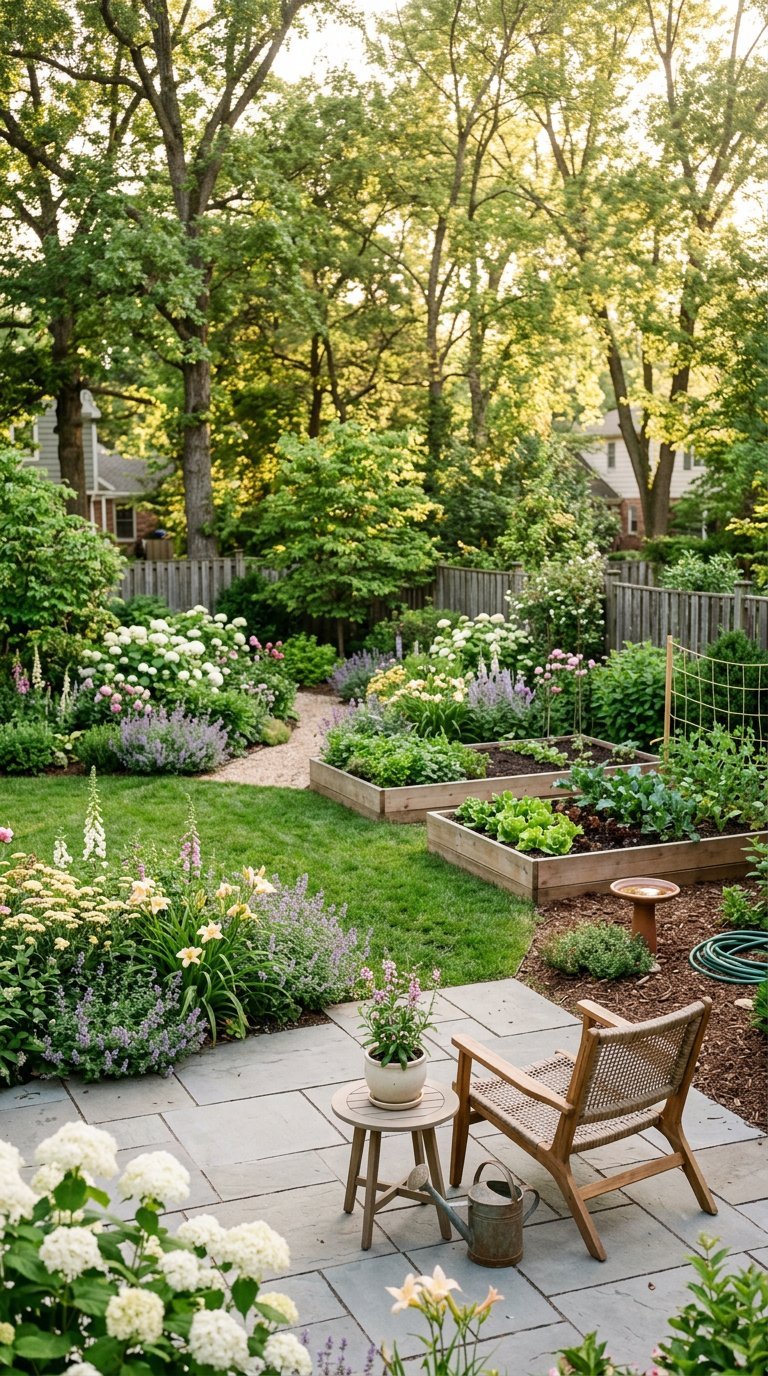
This is one reason raised beds and permanent garden paths can be useful.
Instead of walking across the planting area, create defined paths around your beds.
That keeps the growing soil relatively undisturbed and makes it easier to maintain consistent planting areas.
Even a small backyard garden can benefit from this approach.
Consider a Soil Test
If you’re having persistent problems with plant growth, a soil test can provide useful information.
A basic test may provide information about:
- Soil pH
- Nutrient levels
- Organic matter
- Other characteristics depending on the test
This is much better than blindly adding fertilizer or lime.
For example, if your soil already contains adequate nutrients, adding more fertilizer may not solve the underlying problem.
Testing gives you information to work with.
What About Soil pH?
Soil pH affects how easily plants can access certain nutrients.
Different plants have different preferences, so there isn’t one perfect pH for every crop.
Rather than changing soil pH simply because a gardening article recommends it, test the soil first when you have a reason to make an adjustment.
If a test shows that the soil needs an amendment, follow the recommendations provided for your soil and intended plants.
Loosen Compacted Soil Carefully
If your garden soil has become compacted, you may need to loosen it before planting.
For smaller beds, a garden fork can be useful.
Push the fork into the soil and gently loosen the area rather than aggressively turning every layer over.
This can help improve the structure while disturbing the soil less than intensive digging.
If the garden is already healthy and well structured, unnecessary digging may do more harm than good.
Don’t Add Sand to Heavy Clay Without a Plan
One common gardening recommendation is to add sand to clay soil.
This sounds logical because sand is loose and drains well.
But adding a relatively small amount of sand to heavy clay isn’t necessarily a simple solution and can sometimes create an undesirable texture.
If you’re trying to improve clay-heavy soil, focus first on:
- Organic matter
- Better soil structure
- Avoiding compaction
- Appropriate plant selection
- Good drainage management
For significant soil problems, a local soil test or professional recommendation can be more useful than experimenting with large quantities of amendments.
Prepare Soil Before Planting
A simple preparation routine can look like this:
Step 1: Remove obvious debris
Clear away weeds, large roots, rocks, and unwanted material.
Step 2: Check the soil
Look at its texture, drainage, and condition.
Step 3: Test if necessary
Consider a soil test if you’re dealing with persistent plant problems or want more information before making amendments.
Step 4: Add suitable organic matter
Incorporate finished compost or another appropriate amendment based on the condition of your soil.
Step 5: Loosen compacted areas
Use a garden fork or another suitable tool where necessary.
Step 6: Create planting areas and paths
Avoid compacting the soil again by defining where you’ll walk.
Step 7: Plant and maintain
Once your soil is prepared, plant according to the needs of each crop and maintain appropriate moisture.
What Not to Do
Preparing garden soil is often more about avoiding mistakes than buying more products.
Avoid:
- Working saturated soil
- Adding excessive fertilizer without testing
- Using unfinished compost around new plants
- Walking repeatedly through planting beds
- Assuming every garden needs the same amendments
- Changing soil pH without understanding the existing pH
- Trying to fix serious drainage problems with soil amendments alone
Maintain Soil After Planting
Soil preparation isn’t a one-time project.
After your garden is established, continue adding organic matter when appropriate and avoid unnecessary disturbance.
Mulching can also help protect the soil surface, conserve moisture, and reduce weed pressure.
At the end of a growing season, consider what worked and what didn’t.
Your soil will tell you a lot through:
- Plant growth
- Drainage
- Moisture retention
- Root development
- Ease of working
Over time, these observations become valuable information for improving the garden.
Final Takeaway
Good garden soil doesn’t have to be complicated.
Start by understanding what you already have. Avoid working wet soil, reduce compaction, add appropriate organic matter, and test the soil when you need more information.
Most importantly, don’t try to fix every soil problem with the same product.
The goal isn’t to create perfect soil overnight. It’s to create a healthy, workable growing environment and improve it gradually over time.
Final Takeaway
Use the guidance above as a practical starting point, then adjust for your space, climate, materials, and project goals.