Lawn Fertilizer Basics: What Your Grass Actually Needs
Fertilizing your lawn isn't about making grass grow as fast as possible. Learn what the numbers on a fertilizer bag mean, when grass actually benefits from nutrients, how soil testing can help, and why more fertilizer isn't always better.

A greener lawn doesn’t necessarily need more fertilizer.
In fact, applying fertilizer simply because the grass doesn’t look perfect can create new problems.
Healthy lawn care starts with understanding what your grass actually needs.
That means considering:
- Grass type
- Soil condition
- Season
- Growth stage
- Rainfall
- Mowing
- Existing nutrients
Once you understand those factors, fertilizer becomes a tool rather than a guessing game.
What Does Lawn Fertilizer Do?
Fertilizer supplies nutrients that plants use for growth.
The three numbers commonly shown on fertilizer packaging represent:
Nitrogen – Phosphorus – Potassium
For example, a product labeled:
10–5–5
contains a different proportion of these nutrients than one labeled:
20–0–10
The numbers are not a simple “quality score.”
They describe the nutrient analysis of the product.
Nitrogen: The Growth Nutrient
Nitrogen is strongly associated with green, leafy growth.
Adequate nitrogen can help grass produce:
- Green foliage
- New growth
- Greater density
But more nitrogen isn’t automatically better.
Too much can encourage excessive growth, increase mowing requirements, and potentially contribute to other lawn problems.
The goal is appropriate nutrition, not maximum growth.
Phosphorus: Root and Plant Development
Phosphorus plays important roles in plant development.
However, many established soils already contain adequate phosphorus.
That’s why adding phosphorus automatically isn’t always necessary.
A soil test can help determine whether additional phosphorus is appropriate for your lawn.
Potassium: Overall Plant Function
Potassium supports several important plant processes and can contribute to the lawn’s ability to handle environmental stress.
Again, the correct amount depends on the soil and grass.
Don’t assume every lawn needs the same fertilizer ratio.
Start With the Soil
One of the smartest things you can do before creating a fertilizer routine is understand your soil.
A soil test can provide useful information about nutrient levels and other soil characteristics.
Instead of guessing:
“My lawn needs fertilizer.”
you can ask:
“Which nutrients, if any, does my soil actually lack?”
That distinction can prevent unnecessary applications.
Don’t Fertilize Just Because the Grass Looks Brown
Brown grass has many possible causes.
It could be related to:
- Drought
- Heat
- Dormancy
- Poor watering
- Disease
- Pests
- Compacted soil
- Poor drainage
- Nutrient problems
Fertilizer doesn’t solve all of these.
If the grass is brown because it’s severely drought-stressed, adding fertilizer may not solve the underlying problem.
Find the cause first.
Choose Fertilizer Based on Your Lawn
Different lawns have different needs.
Consider:
- Grass species
- Climate
- Soil
- Lawn age
- Growth rate
- Previous applications
A fertilizer routine that works for one lawn may be excessive for another.
This is especially important when comparing advice from different regions.
Read the Fertilizer Label
The label is one of the most useful resources available.
Look for:
- Nutrient analysis
- Application rate
- Recommended timing
- Instructions
- Precautions
- Coverage information
Don’t assume that a larger bag means more value.
What matters is how much product is appropriate for your lawn and how it should be applied.
Measure Your Lawn
Before applying fertilizer, determine the approximate lawn area.
For a simple rectangular lawn:
Length × Width = Square Feet
If the lawn has several sections, calculate each section separately and add them together.
Accurate measurement helps prevent accidental overapplication.
Don’t Guess the Application Rate
The correct application rate depends on the fertilizer product and lawn conditions.
Follow the product’s directions.
Applying more than recommended doesn’t necessarily make grass healthier.
It can create unnecessary nutrient loading and may increase the risk of lawn or environmental problems.
Slow-Release vs. Quick-Release Fertilizer
Some fertilizers release nutrients relatively quickly.
Others are designed to release nutrients more gradually.
Quick-release products
Can provide nutrients rapidly but may require more careful application.
Slow-release products
Can provide a more gradual nutrient supply and may reduce the need for frequent applications.
Neither category is automatically “best.”
The right choice depends on your lawn, product, timing, and maintenance goals.
When Should You Fertilize?
There isn’t one universal fertilizer calendar.
Timing depends on the grass type and local climate.
Cool-season grasses and warm-season grasses have different growth cycles.
Fertilization should generally support periods when the grass can actively use the nutrients.
Avoid blindly following a schedule designed for a completely different climate.
Spring Fertilizing
Spring can be a tempting time to fertilize because everything starts looking green again.
But don’t rush.
If the lawn is already receiving adequate nutrients and growing well, additional fertilizer may not be necessary.
Focus on the lawn’s actual condition.
Summer Fertilizing
Summer can be stressful for grass.
High temperatures and drought can change how actively grass grows.
Avoid assuming that stressed grass needs more fertilizer.
Water and heat management may be more important.
Follow the requirements of your particular grass type and local conditions.
Fall Fertilizing
For many cool-season lawns, fall can be an important period of active growth.
However, the appropriate timing and application still depend on local conditions and the grass being grown.
Don’t use a generic schedule without considering your climate.
Should You Fertilize a Newly Seeded Lawn?
New grass has different requirements from an established lawn.
If you’ve recently overseeded or established a lawn, follow the guidance appropriate for the seed and starter product you’re using.
Don’t automatically apply a regular established-lawn fertilizer immediately.
The goal is to support establishment without creating unnecessary stress.
Fertilizer and Watering Work Together
Nutrients need appropriate growing conditions.
If the lawn isn’t receiving enough water during active growth, fertilizer alone won’t create healthy grass.
Likewise, excessive watering can move nutrients away from where plants can use them.
Think of lawn care as a system:
Soil + Water + Light + Grass + Nutrients
All of these factors interact.
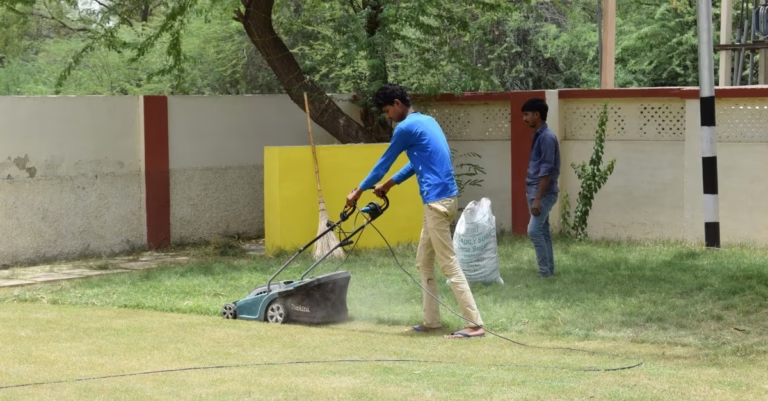
Don’t Ignore Mowing
Mowing affects lawn health too.
Cutting grass too short can increase stress.
Leaving it excessively tall can create other problems.
Follow the appropriate mowing height for your grass type and avoid removing too much of the leaf blade at once.
A sharp mower blade also helps reduce unnecessary damage.
Organic vs. Synthetic Fertilizer
Both organic and synthetic fertilizers can provide nutrients.
The important question is not simply which label sounds better.
Consider:
- Nutrient analysis
- Release rate
- Application requirements
- Soil conditions
- Lawn needs
- Cost
- Availability
Use the product according to its label and your lawn’s actual requirements.
Common Fertilizer Mistakes
1. Applying too much
More fertilizer doesn’t automatically mean a greener lawn.
2. Fertilizing without testing
You may be adding nutrients your soil already has.
3. Ignoring the grass type
Different grasses have different growth patterns.
4. Fertilizing stressed grass
Heat and drought can require a different approach.
5. Measuring incorrectly
Applying the correct product at the wrong rate can still create problems.
6. Following someone else’s calendar
Your climate may be completely different.
A Better Lawn Fertilizer Routine
Before applying anything, ask:
What grass do I have?
↓
What condition is the lawn in?
↓
What does the soil need?
↓
What does the fertilizer label recommend?
↓
How much lawn area do I have?
↓
Is this the appropriate time to apply it?
This takes a little more effort than simply spreading fertilizer every few weeks.
But it’s a much better long-term approach.
Final Takeaway
Fertilizer is only one part of lawn care.
A healthy lawn depends on the interaction between soil, water, sunlight, mowing, grass selection, and nutrients.
Don’t fertilize simply because you want greener grass.
Understand what your lawn needs first, then give it the right amount at the right time.
Final Takeaway
Use the guidance above as a practical starting point, then adjust for your space, climate, materials, and project goals.