Landscaping Cost Guide: How Much Does Backyard Landscaping Cost?
Backyard landscaping costs can range from a simple planting refresh to a major outdoor renovation. Learn what typically drives the price, how to break a project into stages, and how to create a realistic landscaping budget before you start.
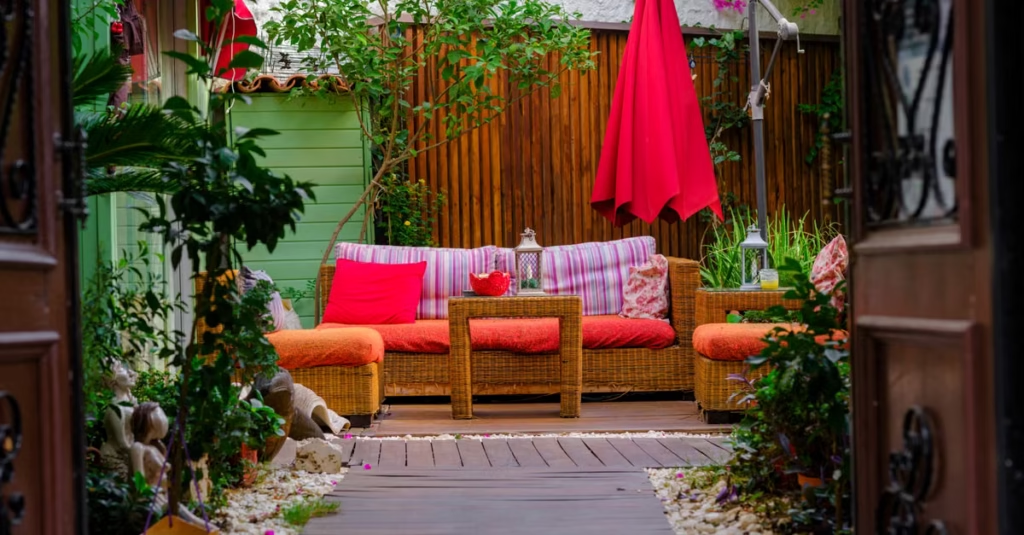
Backyard landscaping can be surprisingly difficult to price.
One homeowner might spend a relatively small amount refreshing planting beds, while another could spend many thousands on a new patio, retaining walls, drainage, lighting, fencing, and outdoor living areas.
That’s why there isn’t one useful answer to the question:
“How much does backyard landscaping cost?”
A better approach is to understand what you’re actually building and which parts of the project have the biggest effect on the budget.
This guide walks through the major cost categories and shows how to build a landscaping budget before construction begins.
What Determines Landscaping Cost?
The total cost of a backyard project usually depends on several factors.
The biggest ones include:
- Size of the area
- Site condition
- Materials
- Labor
- Drainage and grading
- Patio or deck construction
- Planting
- Fencing
- Lighting
- Irrigation
- Accessibility
- Design complexity
Two yards with the same square footage can have dramatically different costs.
A flat backyard with good access may be relatively straightforward.
A sloped backyard with poor drainage and difficult access can require considerably more preparation.
Start With the Scope of Work
Before thinking about prices, write down exactly what you want to change.
For example:
Existing backyard
→ Remove old landscaping
→ Improve drainage
→ Build patio
→ Add planting beds
→ Install lawn
→ Add privacy planting
→ Add lighting
That list gives you something much more useful than simply saying:
“I want to landscape my backyard.”
Once the scope is defined, you can estimate each part separately.
Landscaping Cost Categories
A useful way to organize your budget is by project category.
1. Site Preparation
Site preparation can include:
- Removing existing plants
- Removing old paving
- Clearing debris
- Excavation
- Soil removal
- Basic grading
This work is easy to overlook because it isn’t always visible in the finished backyard.
But difficult site conditions can make preparation one of the more important parts of the budget.
If you’re removing an existing patio, large tree, concrete surface, or significant amount of soil, get those costs understood before committing to the rest of the project.
2. Soil and Garden Beds
If you’re creating planting areas or raised beds, you’ll need to consider:
- Soil
- Compost
- Mulch
- Edging
- Plants
- Delivery
The amount of soil required can become significant for larger projects.
Calculate the volume before ordering.
For a rectangular area:
Length × Width × Depth = cubic feet
If you need cubic yards:
Cubic feet ÷ 27 = cubic yards
This same calculation can be used for raised beds and many other landscape materials.
3. Lawn Installation
A new lawn can be installed in several ways.
Common options include:
- Seed
- Sod
- Existing lawn renovation
The cost depends on the size of the area and how much preparation is required.
A lawn that needs only seeding may have a very different budget from one requiring extensive grading, soil preparation, irrigation, and sod installation.
Don’t compare the price of seed and sod alone.
Compare the complete installed project.
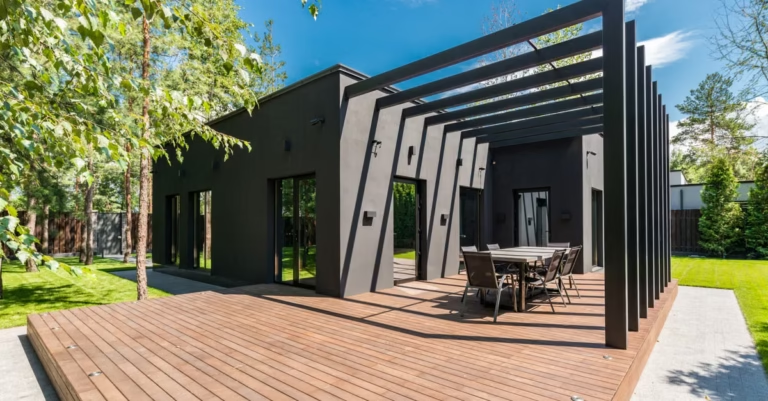
4. Patio Costs
Patios can become one of the largest components of a backyard renovation.
The final price depends on:
- Patio size
- Material
- Site preparation
- Excavation
- Base preparation
- Drainage
- Shape
- Access
- Labor
Common patio materials include:
- Concrete
- Concrete pavers
- Brick
- Natural stone
- Other outdoor paving products
A simple rectangular patio is generally easier to plan and construct than a complicated layout with multiple curves, levels, steps, and borders.
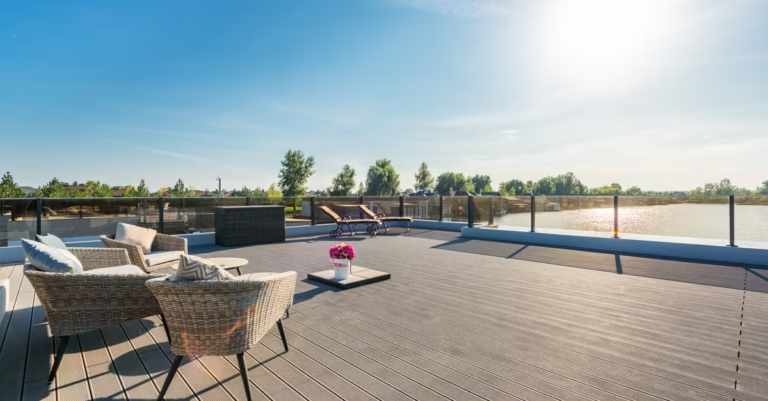
5. Deck Construction
A deck can also represent a significant portion of the budget.
Costs can vary depending on:
- Deck size
- Height
- Material
- Foundation requirements
- Railings
- Stairs
- Site access
- Local building requirements
Don’t budget only for the decking boards.
The structure underneath, supports, stairs, railings, and other required components all contribute to the final cost.
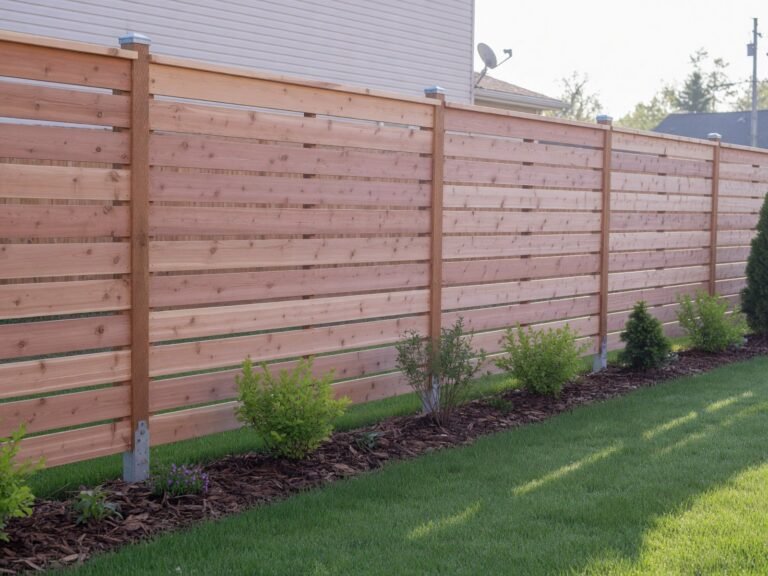
6. Fencing
Fence projects are often priced by linear foot, but the actual cost depends on much more than length.
Consider:
- Fence material
- Height
- Number of gates
- Posts
- Ground conditions
- Existing fence removal
- Terrain
- Labor
A straight, accessible fence line is generally easier to install than one crossing difficult terrain.
If you’re replacing an existing fence, include demolition and disposal in the project budget.
7. Planting
Planting costs can range from relatively modest to substantial.
The cost depends on:
- Number of plants
- Plant size
- Tree selection
- Shrub selection
- Groundcovers
- Soil amendments
- Mulch
- Installation
Buying smaller plants can reduce the initial cost, but larger established plants can provide an immediate visual impact.
The right choice depends on your budget and how quickly you want the landscape to mature.
8. Irrigation
If your landscape requires regular watering, irrigation may be worth considering.
Possible components include:
- Main lines
- Drip irrigation
- Sprinklers
- Controllers
- Valves
- Backflow protection where required
- Installation
The cost depends heavily on the size and complexity of the system.
Before installing irrigation, consider the water requirements of your plants.
Grouping plants with similar watering needs can make irrigation easier to manage.
9. Outdoor Lighting
Landscape lighting can improve usability and safety after dark.
Possible locations include:
- Paths
- Steps
- Patio
- Entry points
- Trees
- Planting areas
You don’t necessarily need lights everywhere.
Start with the areas where lighting provides a clear practical benefit.
Then add decorative lighting if the budget allows.
10. Drainage
Drainage deserves special attention because it can affect almost everything else.
If your backyard regularly experiences:
- Standing water
- Erosion
- Wet lawn
- Water against the house
- Muddy areas
solve the drainage problem before installing expensive finishes.
Possible solutions depend entirely on the site.
They can include changes to grading, drainage channels, collection systems, or other measures.
For serious drainage issues, professional assessment is often worthwhile.
Landscaping Labor Can Change the Budget
Materials are only part of the project.
Labor can become a major cost, particularly when the project involves:
- Excavation
- Concrete
- Masonry
- Drainage
- Retaining walls
- Electrical work
- Structural construction
Don’t assume the material cost tells you what the completed project will cost.
When getting quotes, ask whether the estimate includes:
- Materials
- Labor
- Delivery
- Disposal
- Site preparation
- Cleanup
- Permits where applicable
DIY vs. Hiring a Professional
Not every landscaping project needs a contractor.
Some tasks may be suitable for DIY homeowners, such as:
- Planting
- Mulching
- Simple garden beds
- Basic lawn renovation
- Small decorative projects
Other work can become much more complicated.
Examples include:
- Retaining walls
- Major grading
- Drainage systems
- Structural decks
- Electrical work
- Large concrete projects
Know where your skills end.
Saving money on labor isn’t useful if a mistake creates a much larger repair later.
Create a Three-Level Budget
A useful way to plan your project is to divide the budget into three levels.
Essential
Things that need to be fixed first.
Examples:
- Drainage
- Unsafe structures
- Access
- Grading
Important
Features that make the backyard functional.
Examples:
- Patio
- Lawn
- Planting
- Fence
Optional
Features that improve comfort or appearance.
Examples:
- Decorative lighting
- Outdoor kitchen
- Water features
- Premium materials
- Additional structures
This gives you somewhere to cut if the project becomes more expensive than expected.
Don’t Spend Your Entire Budget on the Patio
It’s tempting to focus on the biggest visible feature.
But a beautiful patio surrounded by poor drainage, unfinished planting beds, and inadequate privacy may not produce the backyard you actually want.
Think about the entire experience.
For example:
Patio
Shade
Privacy
Lighting
Planting
may provide a much more useful outdoor space than simply increasing the patio size.
Build the Project in Phases
You don’t have to complete everything at once.
A phased project might look like:
Phase 1 — Site
Drainage, grading, removal, access.
Phase 2 — Structure
Patio, deck, fence, retaining walls.
Phase 3 — Landscape
Soil, plants, lawn, mulch.
Phase 4 — Comfort
Furniture, lighting, shade.
Phase 5 — Finishing
Decorative features and upgrades.
This approach allows you to spread the cost over time.
Add a Contingency
Outdoor projects can uncover unexpected problems.
You might discover:
- Poor soil
- Hidden concrete
- Drainage issues
- Difficult excavation
- Damaged irrigation
- Unexpected access problems
For that reason, avoid allocating every dollar of your budget to planned work.
Keep some money available for unexpected costs.
The appropriate contingency depends on the size and uncertainty of the project.
Get Comparable Quotes
When hiring contractors, don’t simply collect three numbers and choose the cheapest.
Make sure you’re comparing similar scopes of work.
Ask each contractor to explain:
- What is included?
- What isn’t included?
- Which materials are being used?
- Who handles permits?
- Is cleanup included?
- What happens if site conditions change?
A cheaper quote isn’t necessarily cheaper if important items were excluded.
A Simple Backyard Budget Worksheet
Before requesting quotes, create a list like this:
| Project | Estimated Cost |
|---|---|
| Site preparation | $_____ |
| Drainage | $_____ |
| Soil & planting | $_____ |
| Lawn | $_____ |
| Patio | $_____ |
| Fence | $_____ |
| Lighting | $_____ |
| Irrigation | $_____ |
| Deck | $_____ |
| Furniture | $_____ |
| Contingency | $_____ |
| Total | $_____ |
The numbers will vary significantly by location and project.
The important part is breaking the project into understandable pieces.
Final Takeaway
There is no single “average” backyard landscaping price that applies to every property.
A small planting refresh and a complete outdoor renovation are completely different projects.
The most reliable way to estimate your cost is to:
- Define the project.
- Break it into categories.
- Calculate materials.
- Account for labor.
- Solve drainage and site issues early.
- Separate essential features from upgrades.
- Keep a contingency.
- Get comparable quotes for major work.
Plan the backyard before you price the backyard.
That one step can make a major difference to the final budget.
Final Takeaway
Use the guidance above as a practical starting point, then adjust for your space, climate, materials, and project goals.