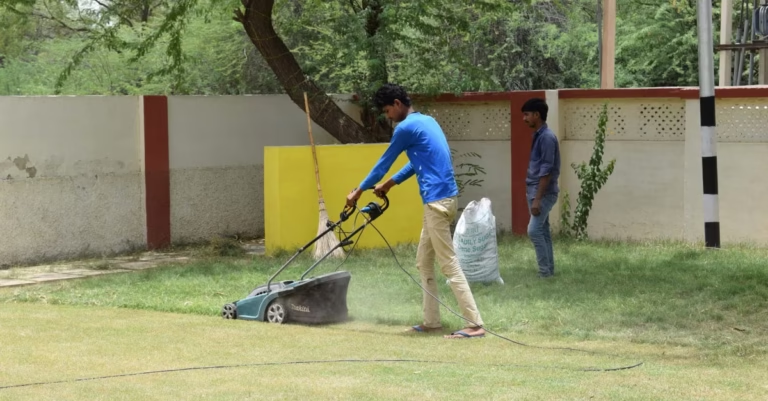
Lawn Care Calendar: What to Do Each Month
A healthy lawn needs different care throughout the year. Use this simple month-by-month lawn care calendar to know when to mow, water, overseed, fertilize, repair thin areas, and prepare your grass for changing seasons.
Lawn care becomes much easier when you stop treating every month the same.
Grass changes with temperature, rainfall, sunlight, and seasonal growth.
What your lawn needs in spring may be completely different from what it needs during the heat of summer.
A simple seasonal routine can help you stay ahead of problems rather than trying to fix them after they’ve already appeared.
Use this calendar as a starting point, then adjust it to your grass type, climate, soil, and local weather.
January: Protect the Lawn
For many lawns, January is a quieter month.
Depending on your climate, grass may be dormant or growing very slowly.
Focus on avoiding unnecessary stress.
January checklist
- Avoid unnecessary traffic on saturated or frozen soil
- Watch for standing water
- Clear large amounts of debris from the lawn
- Check irrigation equipment
- Plan your upcoming lawn projects
- Inspect tools and mower equipment
This is also a good time to think about what went wrong during the previous growing season.
Was the lawn thin?
Did certain areas stay wet?
Did weeds take over?
Use winter to make a plan.
February: Start Planning
As the weather begins changing, start paying closer attention to the lawn.
You don’t necessarily need to start actively treating it yet.
Instead, prepare.
February checklist
- Inspect the lawn for winter damage
- Look for drainage problems
- Check for bare or thin areas
- Plan spring repairs
- Test soil if appropriate
- Check mower condition
- Review your grass type
Good preparation now can make spring lawn care much easier.
March: Assess and Repair
In many regions, March marks the beginning of more active lawn growth.
But conditions vary.
Don’t rush to fertilize simply because the calendar says spring has arrived.
Walk the lawn and assess its condition.
Look for:
- Bare patches
- Thin grass
- Compacted areas
- Weeds
- Drainage problems
- Winter damage
This is the time to decide what needs attention.
April: Encourage Healthy Growth
As temperatures and growth increase, mowing may become more regular.
Adjust your mower according to the appropriate height for your grass type.
April checklist
- Begin regular mowing when necessary
- Monitor soil moisture
- Repair small damaged areas
- Watch for emerging weeds
- Check irrigation coverage
- Continue improving soil conditions
Don’t cut grass dramatically shorter simply because spring growth has begun.
May: Build Lawn Density
By May, many lawns are actively growing.
This can be a productive time to focus on lawn density and consistent maintenance.
May checklist
- Maintain appropriate mowing height
- Water according to actual conditions
- Monitor weeds
- Repair thin areas
- Watch for compacted soil
- Keep mower blades sharp
A healthy lawn should gradually become dense enough to compete with many weeds naturally.
June: Prepare for Summer Stress
Summer conditions can create additional stress from heat, sunlight, and reduced rainfall.
Adjust your maintenance accordingly.
June checklist
- Monitor soil moisture
- Check irrigation coverage
- Avoid unnecessary mowing stress
- Watch for drought symptoms
- Repair irrigation problems
- Look for signs of pests or disease
Don’t assume a summer lawn needs more fertilizer simply because growth or color changes.
First identify what’s causing the change.
July: Water Wisely
July can be one of the most demanding months for lawns in hot climates.
The focus should be on maintaining appropriate moisture while avoiding unnecessary watering.
July checklist
- Check the soil before watering
- Watch for drought stress
- Adjust irrigation after rainfall
- Look for runoff
- Inspect dry areas
- Avoid mowing too aggressively
Remember:
More water isn’t automatically better.
The goal is healthy root-zone moisture.
August: Watch for Stress
Late summer can continue to challenge lawns.
Heat, drought, foot traffic, and poor soil conditions can become especially noticeable.
Instead of trying to make the lawn look perfect immediately, concentrate on reducing stress.
August checklist
- Monitor grass color
- Check soil moisture
- Reduce unnecessary traffic
- Maintain appropriate mowing
- Watch for weeds
- Inspect irrigation
If certain areas repeatedly fail, investigate why.
Don’t simply keep reseeding the same problem spots.
September: Start Planning Fall Work
In areas where fall provides favorable growing conditions, September can be an important lawn-care month.
This is often a useful time to consider:
- Overseeding
- Lawn repair
- Aeration where appropriate
- Soil improvement
- Seasonal fertilizer planning
The exact timing depends on your grass type and local climate.
October: Focus on Establishment
For many cool-season lawns, fall can provide excellent growing conditions.
If overseeding is appropriate for your area and grass type, focus on good preparation and consistent moisture.
October checklist
- Overseed suitable lawns
- Repair bare areas
- Maintain soil moisture
- Continue mowing as needed
- Remove excessive leaf buildup
- Monitor new seedlings
Don’t allow fallen leaves to remain heavily piled across the lawn for extended periods.
November: Reduce Maintenance Gradually
As temperatures drop, grass growth may slow.
Continue mowing as needed rather than following a fixed schedule.
November checklist
- Continue appropriate mowing
- Remove excessive leaves
- Reduce irrigation as conditions change
- Monitor drainage
- Clean and store lawn equipment
- Prepare irrigation for colder weather where necessary
Avoid making major changes simply because the calendar has reached November.
Watch the lawn itself.
December: Review and Reset
December is a useful month to step back.
The lawn may be dormant depending on your climate.
Instead of trying to force growth, review the season.
Ask:
What worked?
What didn’t?
Which areas struggled?
Where did weeds appear?
Did the lawn receive enough water?
Was mowing appropriate?
Does the soil need attention?
Your answers can guide next year’s plan.
A Simple Seasonal Lawn Strategy
Rather than memorizing dozens of tasks, think about lawn care in four broad phases.
Spring — Build
Focus on:
- Recovery
- Mowing
- Soil assessment
- Weed monitoring
- Lawn density
Summer — Protect
Focus on:
- Water
- Heat stress
- Mowing
- Irrigation
- Traffic
Fall — Strengthen
Focus on:
- Overseeding where appropriate
- Repair
- Soil preparation
- Continued mowing
- Establishment
Winter — Prepare
Focus on:
- Protection
- Equipment
- Planning
- Drainage
- Reviewing the previous season
The Important Part: Know Your Grass
A calendar is helpful, but it shouldn’t replace observation.
Cool-season grasses and warm-season grasses have different growth patterns.
Climate also matters.
A lawn in a hot, dry region can require a completely different routine from one in a cooler, wetter region.
Use the calendar as a framework rather than a strict prescription.
Don’t Forget the Soil
Many lawn problems start below the grass.
Compacted or poorly draining soil can affect:
- Root growth
- Water movement
- Nutrient availability
- Lawn density
If the same area repeatedly struggles, look beneath the grass.
A soil test can also provide useful information before you begin changing your fertilizer routine.
Keep Your Mowing Routine Consistent
Mowing isn’t just about appearance.
Cutting too aggressively can stress grass.
Allowing grass to become excessively tall can create other maintenance problems.
Use the mowing height appropriate for your grass type and adjust frequency according to growth.
Keep an Eye on Water
Your watering routine should change throughout the year.
Rainfall, temperature, wind, sunlight, and soil all influence how quickly moisture is lost.
Before watering, check:
Has it rained recently?
Is the soil still moist?
Is the grass showing signs of stress?
Is the irrigation system covering the lawn evenly?
This is more useful than blindly following a fixed schedule.
Keep a Lawn Journal
You don’t need anything complicated.
Record:
- Major lawn projects
- Overseeding dates
- Fertilizer applications
- Soil tests
- Irrigation changes
- Persistent problem areas
- Weed problems
- Weather patterns
After a year, you’ll have valuable information about how your particular lawn behaves.
That makes next year’s decisions much easier.
Monthly Lawn Care Checklist
January
Plan and protect.
February
Inspect and prepare.
March
Assess and repair.
April
Begin active maintenance.
May
Build density.
June
Prepare for summer.
July
Water wisely.
August
Manage stress.
September
Plan fall work.
October
Strengthen and establish.
November
Reduce maintenance gradually.
December
Review and reset.
Final Takeaway
Great lawn care isn’t about doing everything every month.
It’s about doing the right things at the right time.
Watch your grass.
Understand your soil.
Pay attention to weather.
Adjust watering and mowing.
Repair problems before they become larger.
And remember that your local growing conditions matter more than any generic calendar.
A good lawn-care routine isn’t a rigid schedule. It’s a system that changes with the seasons.
Final Takeaway
Use the guidance above as a practical starting point, then adjust for your space, climate, materials, and project goals.