Backyard Landscaping Ideas That Actually Work
A good backyard doesn't need to be expensive or complicated. The best layouts start with how you actually use the space, then build around circulation, seating, planting, shade, privacy, and maintenance. Here are practical backyard landscaping ideas that can work for small and large outdoor spaces.
A backyard can be many things at once.
It might be a place for weekend meals, a play area for children, a garden, a quiet place to sit, or simply an outdoor extension of your home.
The problem is that trying to fit everything into one space can quickly make a backyard feel cluttered.
The best backyard landscaping plans usually start with a simpler question:
What do you actually want to do in the space?
Once you know that, the layout becomes much easier to plan.
Start With How You Use Your Backyard
Before choosing plants, pavers, furniture, or fencing, make a list of the activities you want your backyard to support.
For example:
- Outdoor dining
- Relaxing
- Gardening
- Entertaining
- Children’s play
- Pet space
- Storage
- Fire pit
- Pool or spa
- Lawn
You don’t necessarily need a separate area for every activity.
One flexible space can often serve several purposes.
For example, a paved patio can work for both everyday meals and larger gatherings.
Divide the Yard Into Simple Zones
One of the easiest ways to improve a backyard layout is to create zones.
You might have:
Living zone
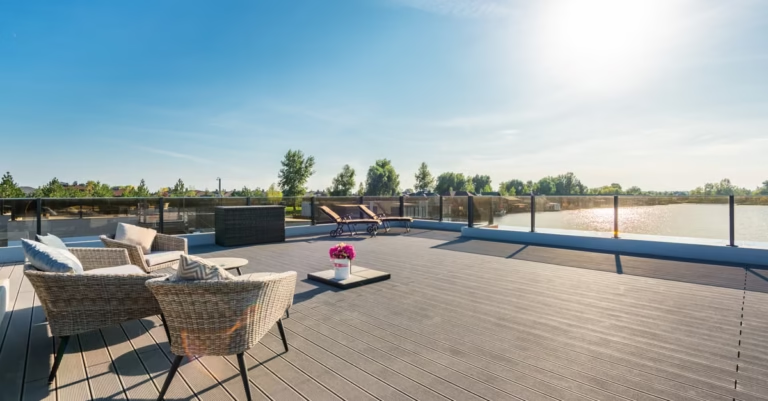
A patio, deck, or seating area close to the house.
Garden zone
Raised beds, planting areas, or fruit trees.
Open zone
Lawn or flexible space for children, pets, or activities.
Utility zone
Storage, bins, equipment, or other less attractive necessities.
You don’t always need walls or permanent structures to separate these areas.
Changes in paving, planting, furniture, or elevation can create a sense of separation.
Create a Strong Connection to the House
Your backyard should feel like an extension of your home rather than a completely separate space.
Think about where people naturally enter the yard.
If the kitchen opens onto the backyard, an outdoor dining area may make sense nearby.
If the living room faces the garden, a seating area could be positioned to take advantage of that view.
The closer and easier an outdoor space is to access, the more likely you are to use it regularly.
Don’t Make the Patio Too Big
A common landscaping mistake is covering too much of the backyard with hard surfaces.
A huge patio may look impressive on a plan but can leave the rest of the yard feeling empty and overly constructed.
Instead, choose a size based on how you actually use it.
Think about:
- Number of people
- Table size
- Chairs
- Walking space
- Grill location
- Door clearance
Leave enough room around furniture for people to move comfortably.
Use Paths to Guide Movement
Paths are useful for more than getting from one place to another.
They can help organize the entire backyard.
For example:
House → Patio → Garden
or:
House → Lawn → Shed
A path can also create a visual line that makes a smaller backyard feel more organized.
You don’t need expensive paving.
Depending on the design, paths can use:
- Concrete
- Pavers
- Gravel
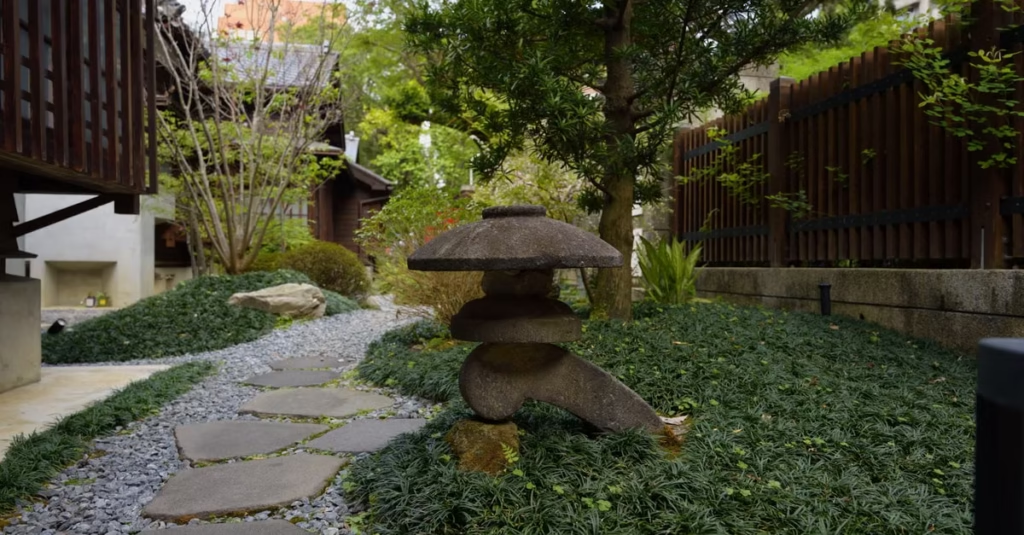
- Stepping stones
- Brick
- Other suitable materials
Choose a surface that matches your climate and how frequently the path will be used.
Add Privacy Where You Actually Need It
You don’t necessarily need to surround the entire backyard with tall screening.
Instead, identify where privacy matters most.
Perhaps you want privacy around:
- A seating area
- Outdoor dining
- A hot tub
- A bedroom window
- A neighbor-facing boundary
Then concentrate your planting or screening in those locations.
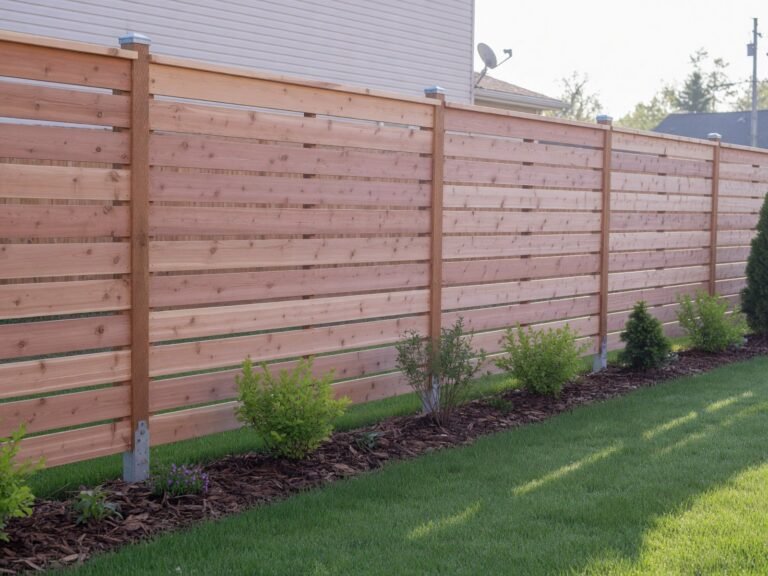
This can be more affordable and often looks more natural than building a continuous visual wall.
Plants Can Create Structure
Plants aren’t just decoration.
They can help define different areas of the backyard.
For example:
Tall plants can create privacy.
Medium shrubs can define boundaries.
Low plants can soften paths.
Groundcovers can reduce exposed soil.
Trees can provide shade and become long-term focal points.
Think about plants as part of the architecture of the backyard.
Plan for Mature Plant Size
One of the most common landscaping mistakes is planting according to the size of the plant at the garden center.
A small shrub can eventually become several feet wide.
A young tree can eventually create significant shade.
Before planting, check the expected mature size.
This helps prevent:
- Overcrowding
- Constant pruning
- Blocked paths
- Plants growing into structures
- Unwanted shade
Give plants enough room from the beginning.
Think About Shade Before Planting
Sun exposure changes throughout the day.
A spot that receives full sun in the morning might be shaded by the house or trees in the afternoon.
Observe the yard before making major planting decisions.
If you’re planning a patio or outdoor seating area, also consider whether you want:
- Morning sun
- Afternoon shade
- Seasonal shade
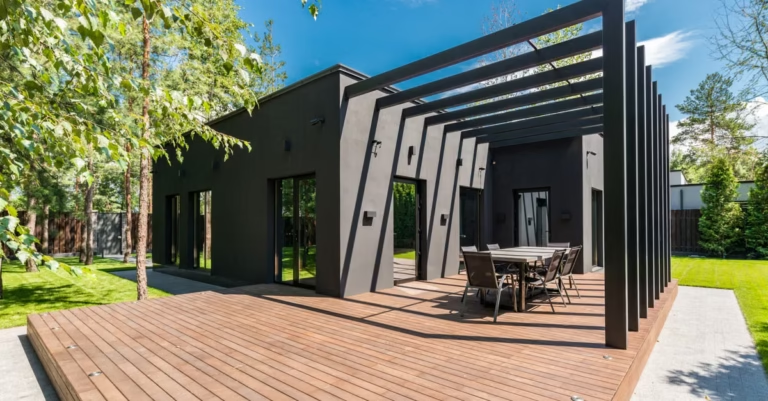
- A pergola
- A shade tree
- A retractable solution
Comfort can make a bigger difference to how often you use the backyard than decorative details.
Don’t Forget Drainage
Water needs somewhere to go.
Before installing patios, planting beds, retaining walls, or other major landscaping elements, understand how rainwater currently moves through the property.
Look for:
- Low areas
- Standing water
- Downspouts
- Sloping ground
- Areas where soil stays wet
A beautiful patio isn’t very useful if water consistently collects next to it.
For significant drainage problems, consider getting local professional advice before construction.
Make the Backyard Useful at Night
Outdoor spaces don’t have to disappear after sunset.
Simple lighting can make a backyard more useful in the evening.
Consider lighting:
- Paths
- Steps
- Seating areas
- Dining spaces
- Entry points
- Important landscape features
Avoid making every part of the yard equally bright.
A combination of functional lighting and softer accent lighting usually creates a more comfortable environment.
Choose Low-Maintenance Features Carefully
A low-maintenance backyard doesn’t mean a backyard with no maintenance.
Everything outside eventually needs some attention.
However, you can reduce the workload by making thoughtful choices.
For example:
- Use plants suited to your climate
- Group plants with similar water needs
- Avoid overly complicated planting schemes
- Choose durable materials
- Keep lawn areas practical
- Provide easy access for maintenance
The goal is to create a yard you can realistically look after.
Small Backyard? Use Vertical Space
A small yard doesn’t necessarily mean you need to eliminate features.
Instead, use vertical space.
Options include:
- Trellises
- Vertical gardens
- Wall-mounted planters
- Climbing plants
- Tall narrow planting
- Privacy screens
Keep the ground layout relatively simple and allow vertical elements to provide structure.
Large Backyard? Don’t Fill Everything
Large yards present the opposite problem.
When there is a lot of space, it can be tempting to add features everywhere.
Instead, create a few strong destinations.
For example:
House
↓
Dining patio
↓
Open lawn
↓
Garden
↓
Quiet seating area
This gives the yard a sense of progression without requiring every square foot to be landscaped.
Consider Your Budget in Stages
You don’t have to complete the entire backyard at once.
A phased approach can make a major project much easier to manage.
Phase 1
Solve drainage, access, grading, and basic structure.
Phase 2
Build the main patio or deck.
Phase 3
Add planting beds and trees.
Phase 4
Add lighting, furniture, screening, and decorative features.
This approach also gives you time to see how the space works before committing to every detail.
A Simple Backyard Planning Checklist
Before starting construction, ask:
Function
What will the backyard be used for?
Layout
Where should people walk and gather?
Sun
Which areas receive the most and least sunlight?
Water
Where does rainwater currently go?
Privacy
Which views need screening?
Plants
How large will plants become?
Maintenance
How much time do you realistically want to spend maintaining the space?
Budget
What needs to be completed first?
Answering these questions can prevent many expensive changes later.
Final Takeaway
Good backyard landscaping isn’t about adding the largest patio, the most plants, or the most expensive features.
It’s about making the space work.
Start with how you live.
Create a simple layout.
Plan movement between areas.
Think about sunlight, drainage, privacy, mature plant size, and maintenance before choosing materials.
Then build the project in stages if necessary.
The best backyard is usually the one you’ll actually use.
Final Takeaway
Use the guidance above as a practical starting point, then adjust for your space, climate, materials, and project goals.